
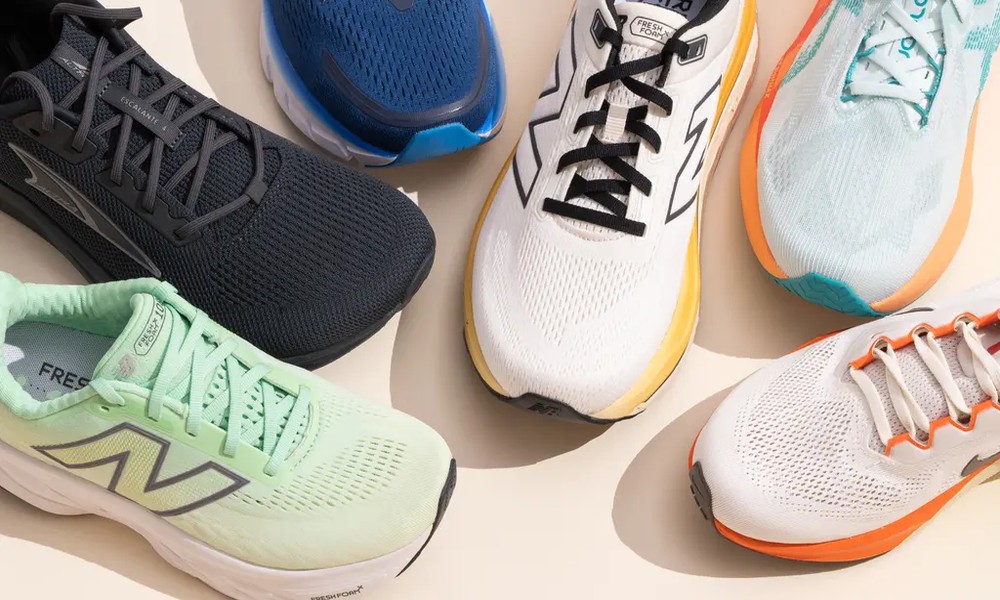
Picture this: you’ve committed to getting fit. You lace up an old pair of sneakers, head out for a jog, and within two weeks your knees are aching, your shins burn, and every step feels like a mistake. You blame your body. But the real culprit? It was probably sitting on your feet the whole time.
Most people don’t realize that the shoes you wear during physical activity are not interchangeable. Choosing the wrong pair doesn’t just affect your comfort; it can quietly damage your joints, alter your gait, and derail your fitness goals before they even begin. The right running shoes are one of the most important decisions a physically active person can make, and yet this choice is rarely taken seriously enough.
Running, Walking, and Jogging Shoes: Why the Difference Matters for Your Knees
Here’s where most people go wrong: they assume that any athletic shoe works for any athletic activity. A walking shoe, a jogging shoe, and a marathon-grade running shoe are built on entirely different engineering principles, and confusing them has real orthopedic consequences.
When you walk, your foot rolls forward in a smooth heel-to-toe motion. Walking shoes are designed with a rocker sole and moderate cushioning to support this rolling motion. They flex at the ball of the foot and don’t need aggressive shock absorption. When you start jogging, even at a casual pace, your impact force jumps to roughly 1.5 to 2 times your body weight per step, according to biomechanics research. A shoe that can’t absorb that force transfers the load directly into your ankle, knee, and hip joints.
Running at a faster pace, especially over long distances like a marathon, pushes impact force even higher, between 2.5 and 3 times your body weight. Marathon shoes are engineered with advanced midsole foam, energy-return technology, and specific heel drop ratios to protect the body across thousands of repetitive impacts. Wearing a walking shoe on a 10K run isn’t just uncomfortable; from an orthopedic standpoint, it’s a slow-motion injury.
⭐ Featured Snippet
Running shoes are designed to absorb 2 - 3x your body weight in impact force per step, while walking shoes handle far less. Using the wrong shoe type for jogging or running increases stress on the knees, ankles, and hips, raising your injury risk significantly over time.
The Science of Foot Type: Pronation, Arch Support, and Shoe Selection
This is where the decision gets personal. No two feet are identical, and the science of pronation, the natural inward roll of your foot when it lands, plays a central role in which running shoes will actually protect you.
There are three primary foot types: neutral arch, flat foot (overpronation), and high arch (underpronation or supination). A neutral runner’s foot lands and rolls inward at a moderate angle, and most standard running shoes are built for this. An overpronator’s foot rolls excessively inward, placing stress on the inner knee ,a leading cause of runner’s knee and IT band syndrome. An underpronator’s foot doesn’t roll enough, concentrating impact on the outer edge and increasing the risk of stress fractures and ankle sprains.
Orthopedic specialists consistently recommend a gait analysis before buying running shoes. Many specialty sports stores offer this as a free service. If that isn’t accessible, a simple wet footprint test ,wetting your foot and stepping onto a flat surface to observe the arch impression; gives a reliable first read on your foot type.
Barefoot running shoes and minimalist designs have gained popularity, and they do strengthen the intrinsic muscles of the foot over time. However, they require a long and gradual transition period. Switching directly from cushioned shoes to barefoot running shoes is a common cause of plantar fasciitis and metatarsal stress fractures. The science here is clear: transition slowly over 8 to 12 weeks, and only consider minimalist options if your feet and calves are already conditioned.
Key Tip: Check your old shoes for wear patterns before buying new ones. Heavy wear on the inner sole signals overpronation; outer-edge wear signals underpronation. This single observation can steer you toward the right shoe category immediately.
How to Buy the Right Running Shoes for Your Feet and Training Style
Before you browse, define what you actually do. Are you a daily walker who occasionally jogs on weekends? A beginner building toward a 5K? A serious runner logging 40+ kilometers per week? Your answer determines your shoe category, your required cushioning level, and your budget priority.
For casual joggers, a stable neutral running shoe with responsive midsole foam is generally sufficient. For runners with overpronation, a motion-control or stability running shoe with medial post support protects the knee. For high-arch runners, neutral shoes with maximum cushioning and flexibility offer the best protection. For long-distance and marathon runners, look for carbon-fiber plated shoes or high-stack foam midsoles that return energy and reduce fatigue across long efforts.
Fit matters as much as technology. Running shoes should have a thumb’s width of space between your longest toe and the shoe’s tip. Your heel should feel locked in with no slippage. Shoes should feel comfortable immediately ,never require a painful break-in period. And always try them on with the socks you plan to run in.
If you are managing an existing knee condition, shin splints, or plantar fasciitis, consult a physiotherapist or orthopedic specialist before making a selection. The right shoe can support recovery; the wrong one can set it back significantly.
Make the Right Choice Before Your Next Step
The gap between walking shoes, jogging shoes, and running shoes is not a marketing distinction; it is a biomechanical reality with real consequences for your joints, your posture, and your long-term mobility. Understanding your foot type, your training intensity, and the science of impact loading puts you in control of a decision that most people leave to chance.
Your next step is simple: identify your foot type, match it to your activity level, and choose a shoe built for the specific demand you’re placing on your body. Your knees will thank you for it.